
One of the things I like to do with my family when we travel is visit university campuses. I know this is probably not everyone’s idea of vacation entertainment, but I am also the woman who thinks walking through an old library sounds like a perfectly lovely afternoon, so here we are. When we visited New York, I was determined to get everyone to Columbia. Visiting my mom in Tennessee meant Vanderbilt and Tennessee State. If we ever make it to London, please understand that Oxford and Cambridge will be on the itinerary whether my children like it or not. They can complain over tea.
My children’s school also has College T-Shirt Day every Wednesday, which I have somehow turned into an excuse to buy them new university shirts every year. I don’t particularly care whether they actually attend any of these schools. I don’t have a secret spreadsheet tracking which third-grade extracurricular will eventually impress Princeton. I just want college to feel familiar to them. I want them to walk onto a campus and think, Oh, I could go here.
At least, that is what I thought I was doing.
Then I went to Martha’s Vineyard and started wondering if I had been thinking about college completely wrong.
It actually started before we reached the island. We were visiting family in Boston when the conversation naturally turned to schools. Their child is still kindergarten-adjacent, and they were already thinking about school choices partly through the lens of eventually positioning their child for an Ivy League education. Initially, I was delighted. Finally. Someone else who thinks about this stuff. Saving for college. Planning ahead. Making sure the children know education is important. These are my people.
Except the longer I listened, the more I realized we weren’t having the same conversation.
I was talking about preparing children for college.
They were talking about preparing children for rooms.
They weren’t only thinking about how to get their child admitted to an elite university. They were thinking about raising a child who would know what to do once they got there. How to speak to professors and executives. How to introduce themselves. How to build relationships. How to be comfortable around people with power without becoming overly impressed by them.
And naturally, because I am incapable of simply enjoying a conversation and moving on with my life, this sent me down a historical rabbit hole.
Some of the world’s oldest universities have been around for nearly a thousand years. Al-Qarawiyyin in Morocco traces its history to 859. Bologna was founded in 1088. Teaching existed at Oxford by the end of the eleventh century. Cambridge came along in 1209. Harvard, the oldest institution of higher education in the United States, wasn’t founded until 1636, when the United States wasn’t even the United States yet.
But their age wasn’t actually what fascinated me.
It was why they existed.
These universities were communities of scholars designed to teach people to read, reason, debate, interpret and eventually lead. Education was supposed to form the person. Of course, these institutions were overwhelmingly built for men and deeply connected to class, religion, race and power, so we do not need to put on tweed jackets and romanticize medieval academia too much. But something about their original purpose stuck with me.
They weren’t simply teaching people.
They were putting certain people in rooms together.
And suddenly I couldn’t stop thinking about that.
Why did wealthy families continue sending their sons to Oxford, Cambridge, Harvard and Yale when those sons didn’t necessarily need degrees to get jobs?
Maybe because the job was never the entire point.
You spent years reading and arguing and learning, yes, but you were doing it beside other people who were likely to eventually hold positions of influence. Your roommate might become a banker. Someone down the hall might become a senator. Someone’s father owned a company. Someone else’s family knew everyone worth knowing in whatever tiny world you were about to enter. Twenty years later, somebody needed an attorney, investor, board member, introduction or simply a person they trusted.
The university gave you an education.
But it also gave you people.
Then I arrived on Martha’s Vineyard and watched the whole thing happen in real time.
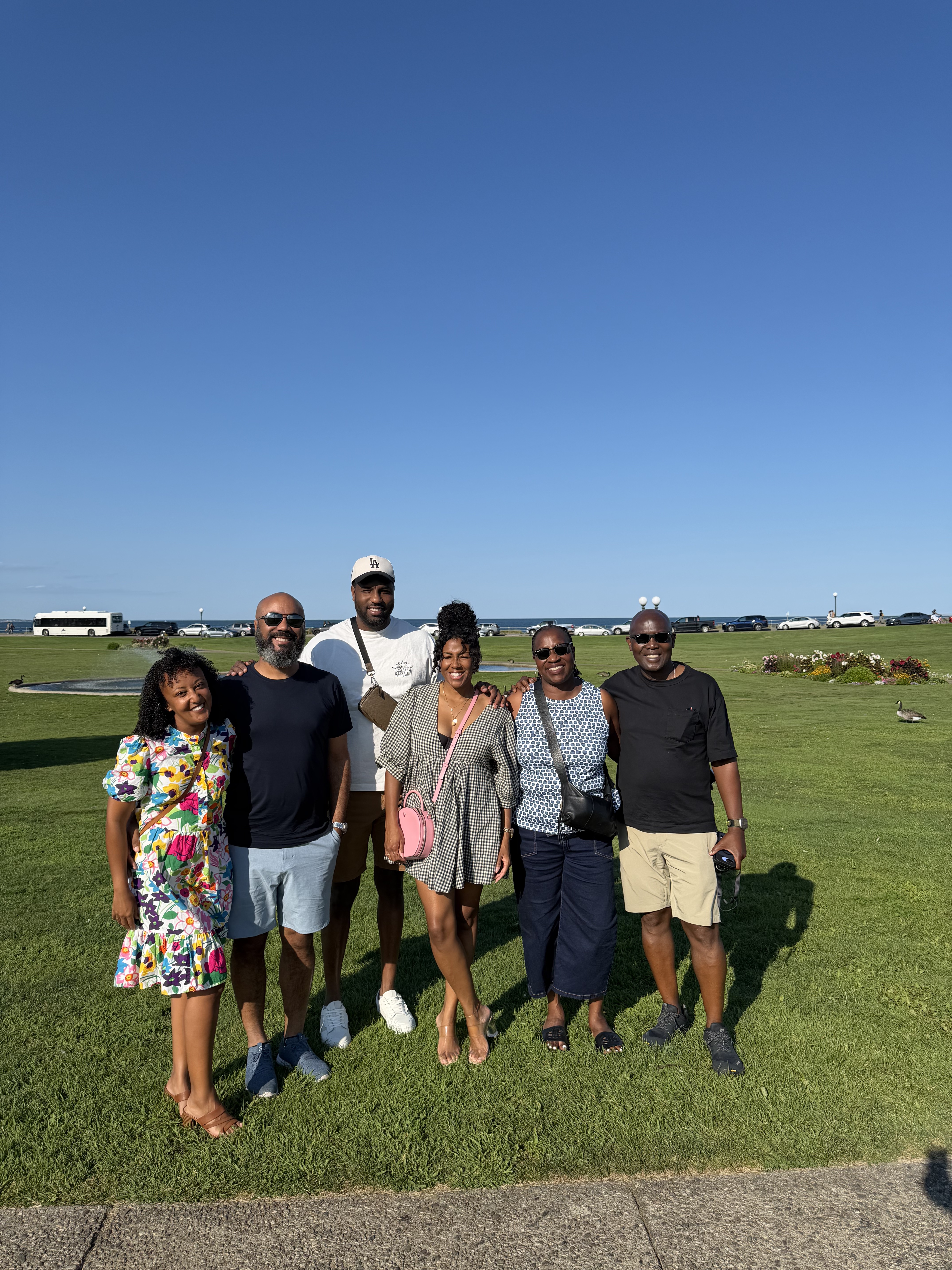
There were university gatherings everywhere. Harvard. Brown. Yale. Hampton. Spelman. Morehouse. And these weren’t twenty-two-year-olds desperately trying to hold onto college. These were grown adults arriving with spouses, careers, friends and, most importantly, children.
I kept hearing some version of the same introduction.
“This is so-and-so. We went to Yale together.”
Or Harvard.
Or Brown.
Or Hampton.
And the children were standing right there.
That was the moment it clicked for me.
Those children weren’t simply being told they should attend a good college someday. They were being introduced to an institutional community before they were old enough to fill out an application.
For Black families, there is something particularly powerful about that. For generations, we were excluded from many of America’s most influential educational institutions and the networks surrounding them. Now there are Black families who aren’t simply entering these institutions. They are becoming second- and third-generation participants in them.
Granddad went to Harvard. Dad went to Morehouse. Mom went to Brown. Auntie went to Spelman. And somehow everybody ends up on Martha’s Vineyard in August drinking something expensive while their children run around absorbing an entire lesson in social capital without anyone pulling out a PowerPoint presentation.
That may have been my biggest realization of the entire trip:
Nobody has to explain the network to children who grow up inside the network.
They just know it exists.
Maybe that is also why this felt so foreign to me as a Californian.
California certainly has elite universities. Stanford is one of the most powerful universities in the world. Berkeley has extraordinary intellectual and cultural influence. UCLA, USC, Caltech and the entire UC system have massive networks of their own. But our college culture feels different. We have this enormous public university system, and so much of the conversation I hear around raising children here is about GPA, AP classes, extracurriculars, acceptance rates, scholarships and which UC your child can get into.
We absolutely have elite networks. Good Lord, have you met Stanford?
But the rituals feel different.
There is something very East Coast about walking around a university that existed before California was a state and then taking a ferry to an island where alumni from that university are still finding one another generations later. There are families who have been returning to the same campuses, summer places and social circles long enough for the relationships themselves to become an inheritance.
And then there is my family.
My children attend public school in Orange County, California. Their grandfather went to Harvard. They have aunts and uncles with elite university experiences. Their father went to Morehouse.
Their mother went to the University of Alabama in Huntsville.
And before anyone from Huntsville comes for me, there is absolutely nothing wrong with UAH. It gave me a wonderful education and helped launch a career that served me very well. But if I am being truthful, I did not choose college because I understood institutional networks, social capital or intellectual formation.
My parents’ college counseling was essentially:
Get a degree that gets you a job.
And for an immigrant family trying to establish itself in America, that made perfect sense.
College was economic security.
You became a nurse. An engineer. A physician. An accountant. Something respectable with health insurance.
Nobody sat me down at seventeen and said, Kalie, let us carefully consider which institution will shape your intellectual and social ecosystem for the next forty years.
Please.
We were trying to make sure I could pay my bills.
And it worked. I became a nurse, earned an MBA, moved into healthcare leadership and built a very respectable professional life.
But now, at 37, building a nonprofit from scratch, I find myself asking a question I never would have known to ask at eighteen:
Who would I know if I had understood college differently?
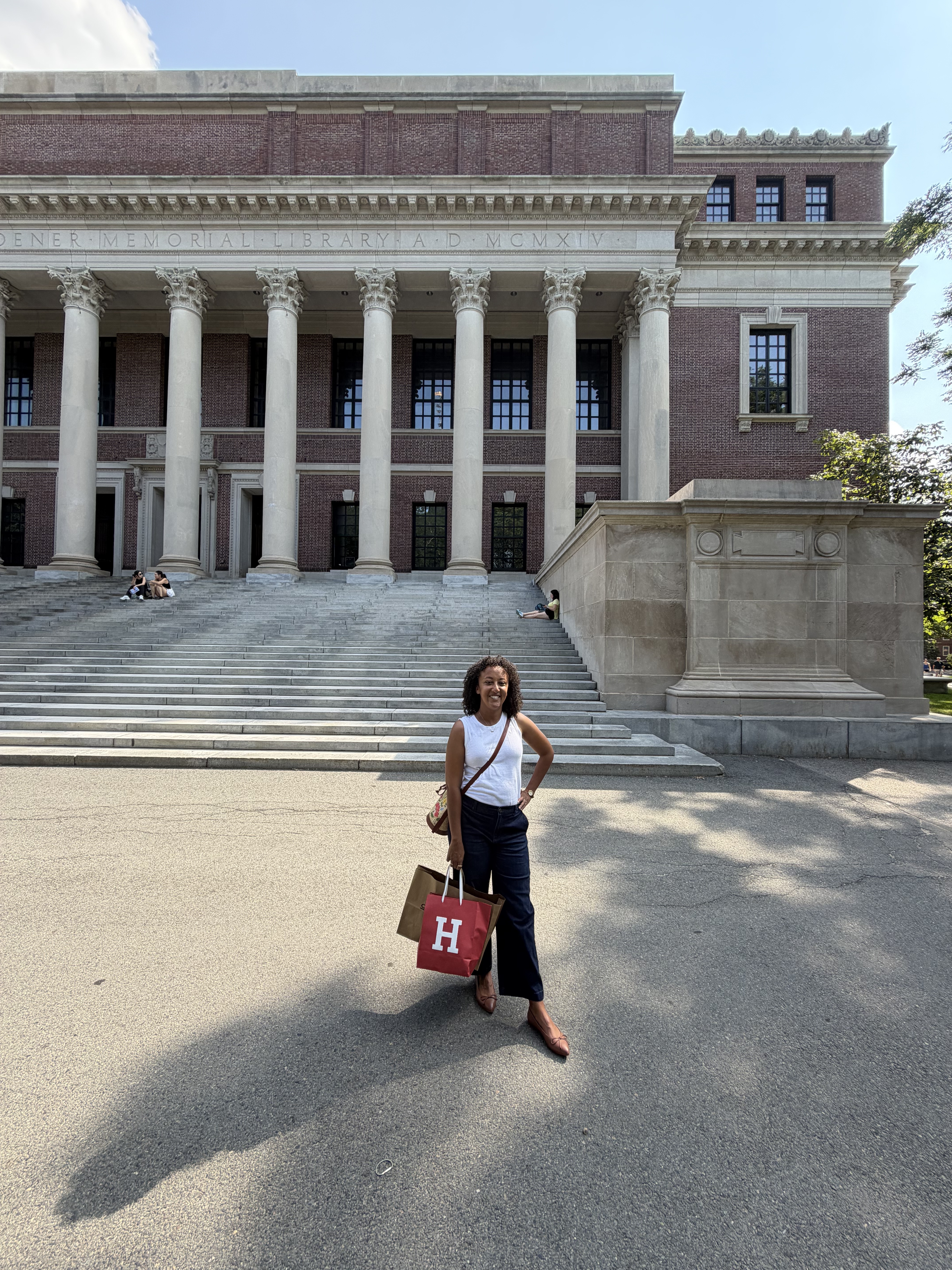
As I sat on the steps of Harvard’s library, I started wondering whether building Held & Rooted would feel this hard if I had spent four years there. Not because Harvard would have magically made me smarter. I have two degrees, had a successful career in healthcare and somehow taught myself enough about technology and nonprofit governance to build an app and a nonprofit while also remembering that somebody needs to pick these children up from school. I think I am doing okay.
What I wondered was whether Harvard might have made me less alone.
Would an old roommate now be sitting on a foundation board? Would a classmate say, Send me the grant application. I know someone. Would there be people who believed in me simply because they knew me long before I needed anything from them? People saying my name in rooms I wasn’t in because somewhere along the way I had become one of their people?
That thought hit me harder than I expected. I have spent years building community for other people, and sometimes I wonder where the community is that carries me.
Maybe that is the privilege we misunderstand about elite education. It isn’t that everyone at Harvard is smarter. It is that you can spend four years collecting people who may spend the next forty opening doors for one another. Now, would a Harvard degree have guaranteed me a million-dollar grant? Absolutely not. But surely somebody in that alumni network could help me understand why people with Netflix, DoorDash and a $9 iced latte are prepared to take a principled stand against my $30-a-year membership fee.
But I don’t regret my education.
Actually, this entire rabbit hole has made me appreciate my parents’ choices more.
They taught me the version of education they understood would create security. Get educated. Become employable. Support yourself. Build a stable life. That formula changed the trajectory of countless families, including mine.
Maybe now I have the privilege of teaching my children what comes after security.
Because somewhere along the way, many of us were handed a very transactional understanding of college:
Study. Degree. Job. Salary. Stability.
Meanwhile, some families seem to have held onto something older: education as formation, relationships, cultural fluency, institutional belonging and eventually stewardship from one generation to the next.
I want my children to understand both.
I still don’t particularly care whether they attend Harvard. I would love for them to seriously consider an HBCU. There is something incredibly powerful to me about Morehouse, Spelman, Howard and Hampton and the communities surrounding them.
But maybe my job isn’t to determine which college they attend.
Maybe my job is to make sure they understand what college can actually be.
Not simply four years you endure so somebody will hire you afterward, but a place where you wrestle with ideas, learn to speak and reason, encounter people unlike yourself, find mentors and build friendships that might survive careers, marriages, babies, cross-country moves and, apparently, eventually reunite everyone over cocktails on a tiny island off Massachusetts.
So yes, I will continue dragging my children onto university campuses everywhere we travel.
Except now, I think I will talk a little less about getting into these places.
I want them to look around.
Who is here? What are people talking about? What could you learn here? Who might you become here? What kind of people would you want sitting beside you? And what kind of person would you want to be for them twenty years later?
Because maybe the real legacy isn’t getting your child into Harvard because Grandpa went there.
Maybe the real legacy is raising a child who understands that wherever they go, their education should give them more than a way to make a living.
The degree eventually goes into a frame.
The relationships leave campus with you.
And if I can teach my children to build both, perhaps I won’t need to keep buying them a different college T-shirt.
Although, let’s be serious.
I’m still buying the shirts.
Always Have, Always Will ~ Kalie



Leave a Reply